Configuration Management
Overview
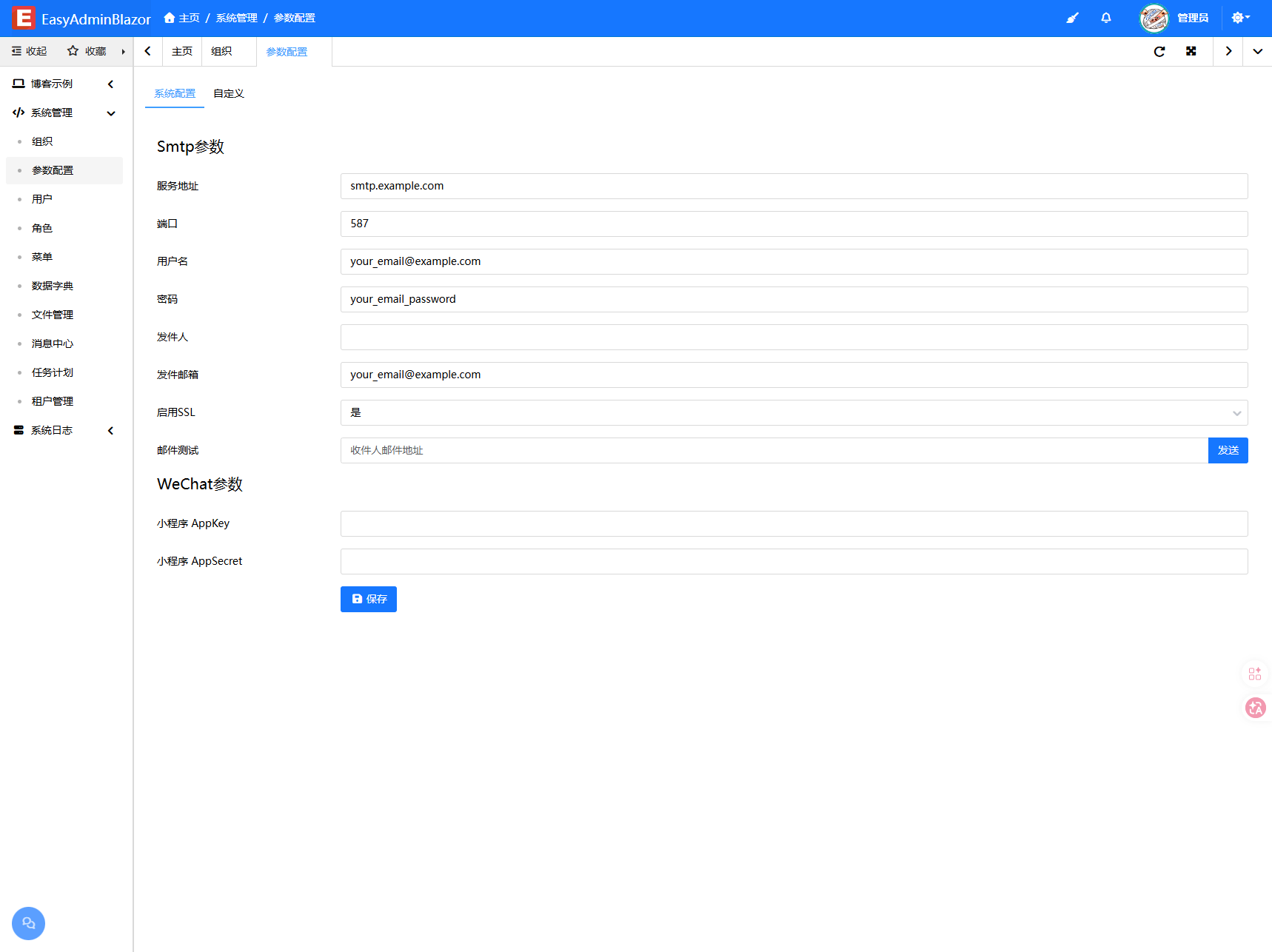
Configuration items are stored as key-value pairs. The page has two sections: the top is a quick-edit area for common system parameters, the bottom is the table for custom configuration items. Changes take effect after saving, without restarting the application.
Usage
Accessing the Configuration Management Page
Navigate to "System Management" → "Configuration Management" in the system navigation bar.
Quick Editing of Common Parameters
The upper part of the page displays common system parameters (such as site name, logo, email settings, etc.). Edit the value in the text field and click "Save Configuration" to apply. The quick editing area is implemented via the AdminDictionaryInput component.
Managing Custom Configuration Items
The lower part of the page is a configuration item table, supporting:
- Add: Click the "Add" button, enter the configuration key (Code), value (Content), and description
- Edit: Click the "Edit" button on a row to modify the configuration item
- Delete: Select the configuration items to delete and click the "Delete" button
- Search: Enter keywords in the search box for quick filtering
Interface Description
System Configuration Area
- Quick edit form for common configurations
- Click the "Save" button to persist changes
Custom Configuration Table
- Code: Configuration key, used by the program to read the configuration
- Content: Configuration value
- Description: What this configuration is used for
Centralized Third-Party Service Settings
Settings for mail, SMS, Redis, WeChat Pay and other third-party services can be maintained centrally in the configuration page instead of being scattered across multiple files.
Related Entities/Services
SysConfig— Configuration entityIEnumerable<IConfigSettingsContributor>— configuration contributors registered by extensions, iterated directly by the config pageIEmailService/ISmsService— Email/SMS service parameters configurable in settings